


Design in Focus: Artist Jan Ernst’s Shape-Shifting Creations
Collectable claywork, lighting and furniture that transcends its nature-inspired form.
By Inside Guide • 22 July 2026
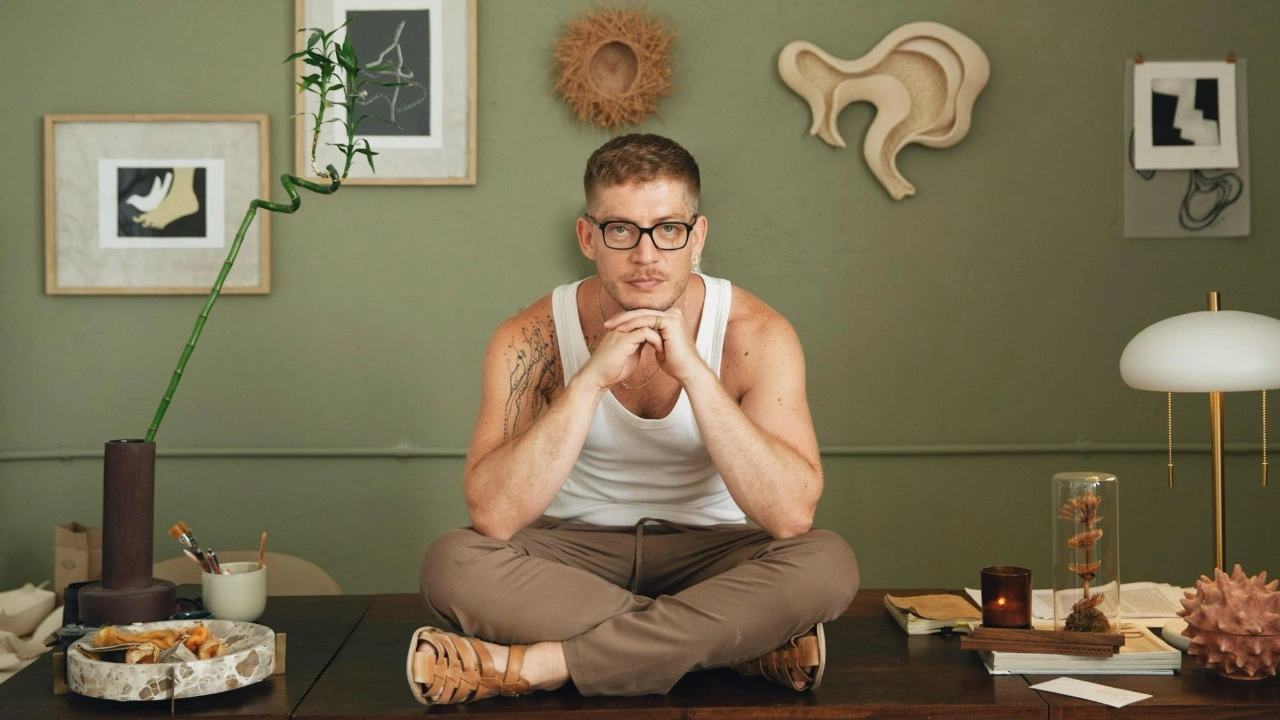
You might discern traces of local landscapes in the conceptual furniture and lighting of artist Jan Ernst. A hint of the coastline and forests of Cape Town, the expanse of the Karoo and the rocky ridges of the Cederberg. His work looks familiar, like a found object or something unearthed, yet also otherworldly. It has been described as “biomorphic”, blending organic form with an abstract sensibility.
There are candelabras that look like branches, a fleshy plant or bulbous puzzle piece; wall sconces that resemble a niche in a cave or the curve of a fossil or shell; vessels like exotic flowers or alien life forms; tables that curve and fold like paper, or which look woven but are ceramic; and vine-like lights that seem to grow out of rocks. His “Shape of Water” mirror frames give the effect of looking into a pool… The joy is in going where Jan’s mind takes you.
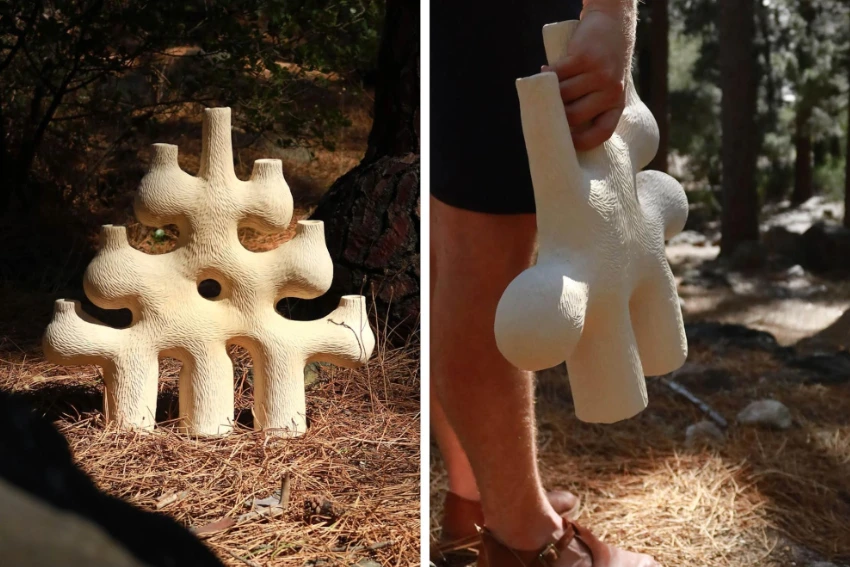
What he creates sits somewhere between art, structural design and functional object, mirroring the journey he’s taken to get to where he is today. “I’m interested in pieces that carry a sense of history while feeling entirely contemporary,” says Jan, “objects that are rooted in place but resonate globally.”
The nature of things

Jan grew up on farms and spent a lot of time outdoors, observing the seasons and cycles of nature and the intricate structures of the natural world – from delicate corals and forest fungi to seed pods, trees and rock formations. Landscapes sparked his interest in form, texture and the way objects relate to space, which ultimately led to him studying architecture.
After swapping over to art school, he later returned to architecture (getting his Masters degree in Barcelona). As a working architect, when Covid put his building projects on hold, he turned to clay and building things in 3D form with his hands – and discovered his calling.
Fascinated by how the light from candles interacted with ceramics, he focused on creating lighting, and first made candelabras inspired by the ocean. He went on to produce collections that included pendants, sconces, floor lamps and more, based on seed pods, trees and termite mounds; his delicate Wildflower Waters chandelier, and Womb lights inspired by the Stadsaal Caves.
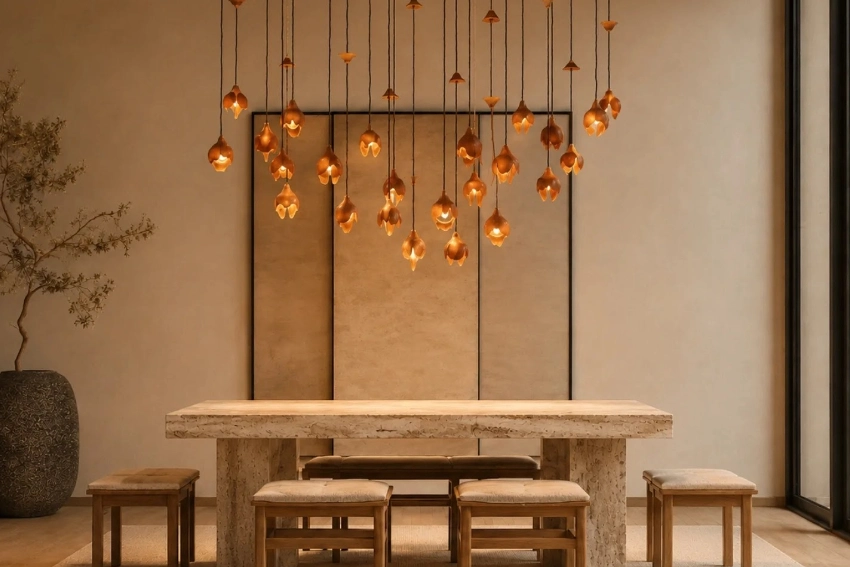
After a three-month artists’ residency in France in 2022, he returned to South Africa keen to expand his material palette and the scale of his work (into furniture, for example). From clay – white stoneware, black clay and terracotta – he’s started working with plaster of Paris, as well as cast bronze and fused glass that bring an added element of light and texture to his work, and capture both the ancient and modern aspects of artisanal craft.
Material matters
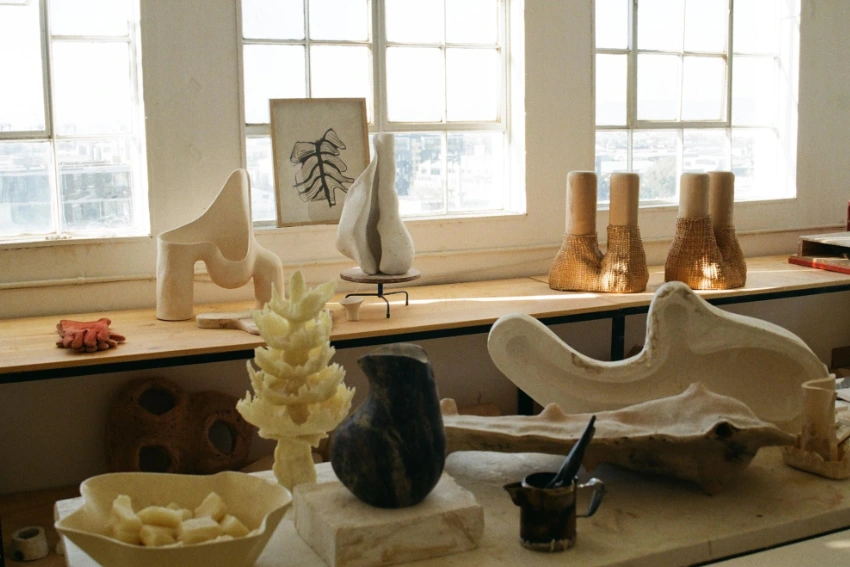
Jan calls himself a “form-maker” who explores ideas that evoke feeling. “Design should be emotional as much as functional – objects can create atmosphere, carry narrative and foster connection.” For him, objects should alter how a space feels, not just how it looks.
His work is highly tactile and material-led, allowing the process, texture and experimentation to guide the final form a piece takes. “Material teaches us something – form emerges only through tension; it’s about the interplay of resistance and becoming.”
His palette is muted, earthy and natural, allowing the materials (rather than colour) to take centre stage. His pieces have a timelessness and simplicity to them, displaying precision mixed with sensitivity, and an understanding of form and space influenced by his background in architecture.
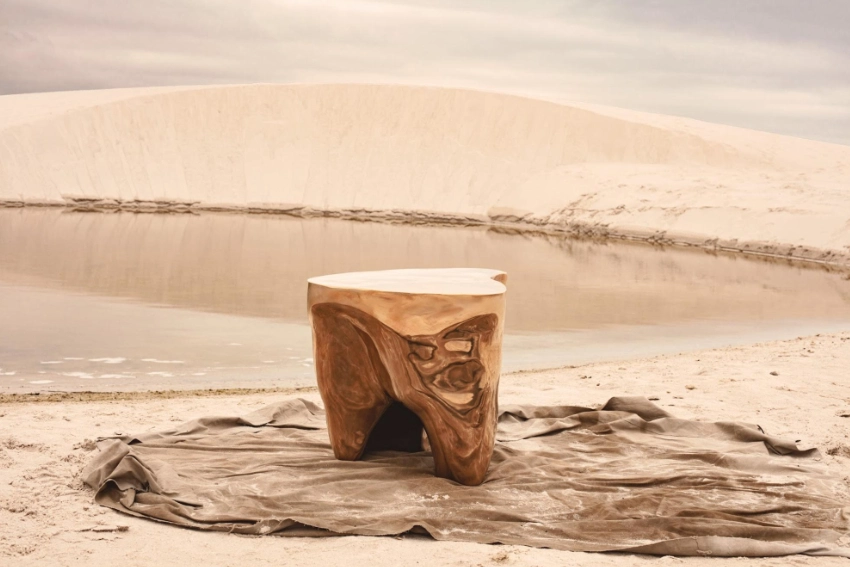
Combined with his affinity for nature is an interest in Surrealism, as well as Gaudi and sculptor Henry Moore, and the fantastical work of SA’s own Walter Battiss. His Eye lamps are a case in point, as well as his Mushroom side table and bronze Mirage coffee table that tricks the eye – examples of how he brings imagination to everyday objects.
Resonating stories
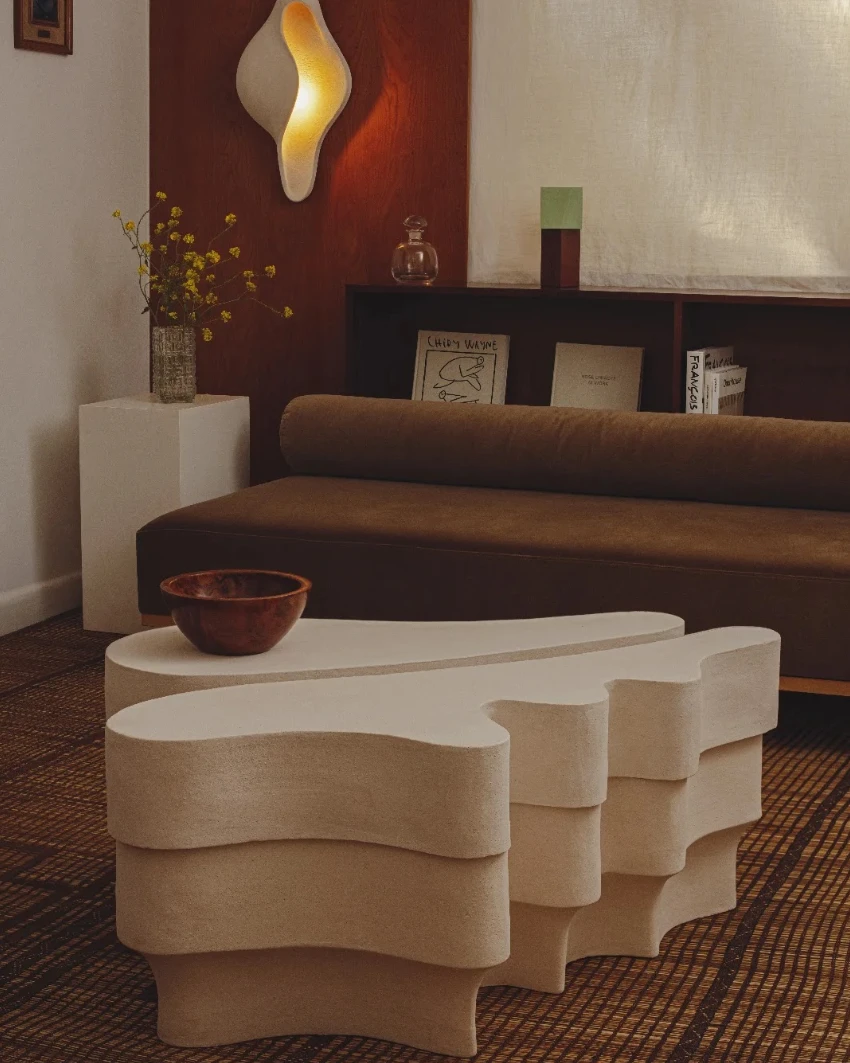
His ongoing Cavus collection (started in 2025) was inspired by the arid Karoo landscape shaped by the elements and time, and the effect clouds and shadows have on the land. A table light takes the form of an acacia seed, an armchair and coffee table echo the undulating hills, an egg-like cabinet inspired by the Valley of Desolation has rounded hollows.
“We are moving towards a more human and materially conscious era of design,” says Jan. In a world increasingly shaped by technology and digital life, “there is a growing appreciation for craftsmanship, authenticity and objects with genuine narrative depth.”
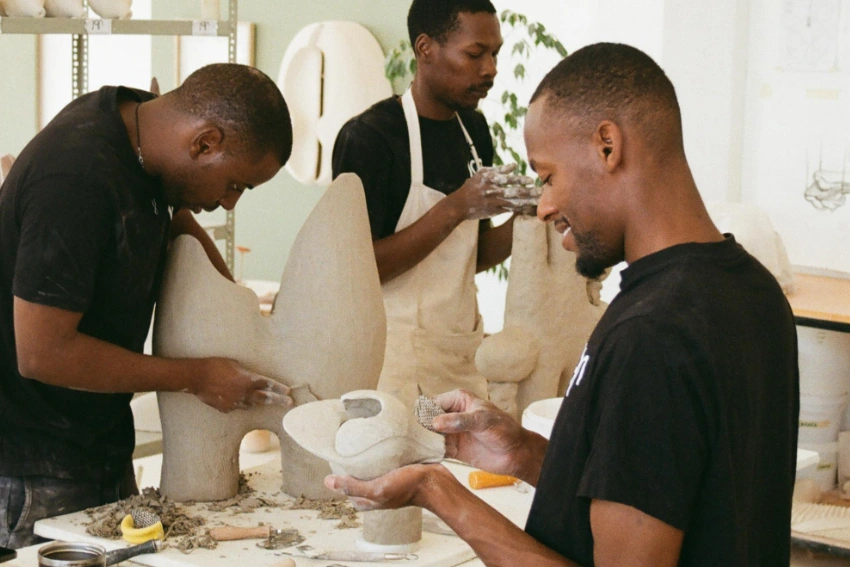
He speaks of South Africa’s rich cultural histories, diverse craft traditions and our relationship with the landscape, which all come together to create something unique. “The future belongs to work that feels deeply personal, culturally specific and impossible to replicate elsewhere, and I think South Africa has an important role to play in that conversation.”
A new direction
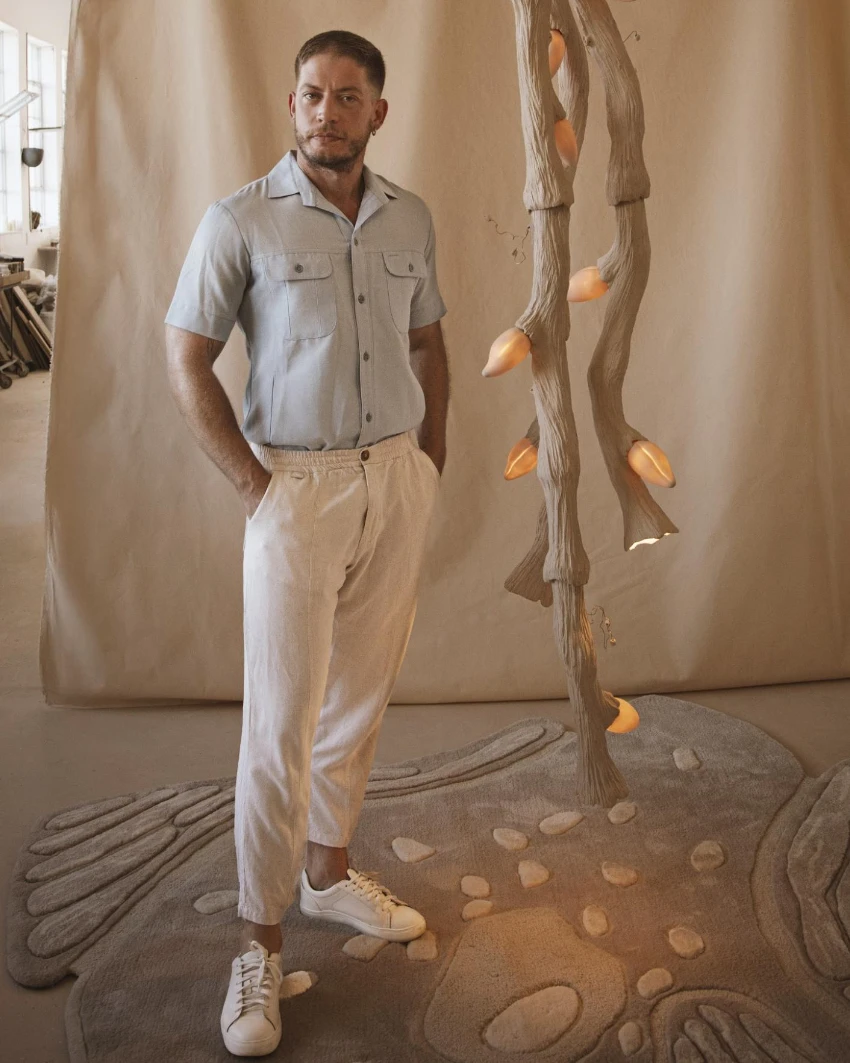
Having recently travelled through Namibia, Jan found inspiration in its vast landscapes. “Light appears and disappears, shadows drift across surfaces, forms emerge and dissolve… Much of what makes the experience so powerful is almost invisible.”
His new work (set to debut in 2027) will represent a departure of sorts – instead of representing, replicating or describing the natural world, it is an attempt to express its intangible qualities; a study of stillness and light, where negative space becomes as important as the material itself.
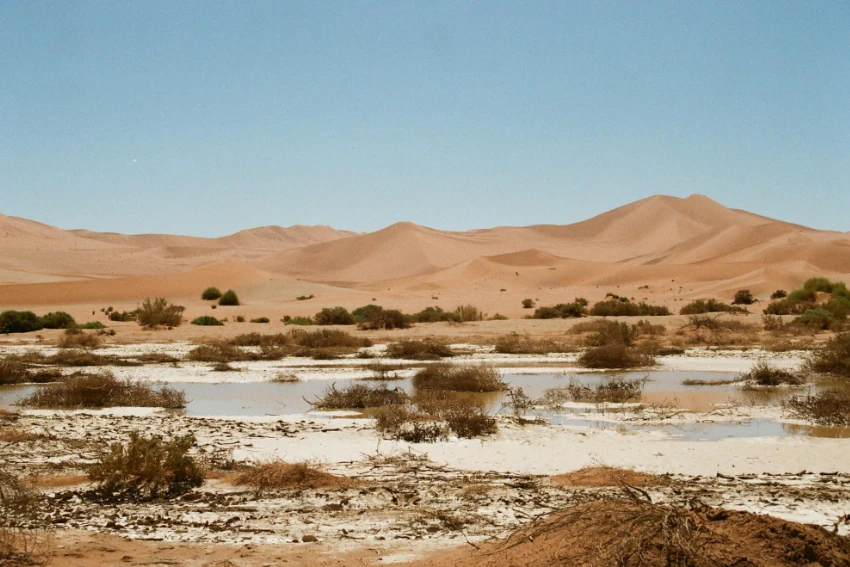
Jan debuts new collections at design fairs across the world, including Paris, Miami and Brussels, and his work is held in galleries in New York, Amsterdam, Dubai and Geneva. He’s also exhibited at Cape Town’s Art Fair and Design Week, and the Latitudes Art Fair in Johannesburg. This past May, he hosted a residency in the Karoo.
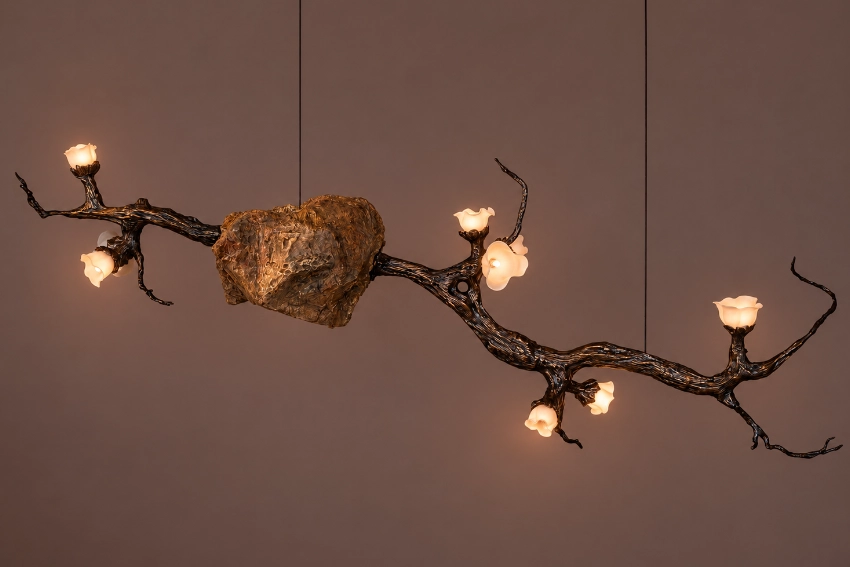
Although his signature, limited-edition works are still available in his catalogue, Jan has moved increasingly into private commissions and bespoke projects, including wall sculptures, light installations and even a ceramic furniture collection. He’s in the business of turning dreamlike visions into tangible, mind-bending reality – where nothing is quite as it seems, but belongs perfectly anyway.
Good to know His work is included in the current group show, “Among the Trees”, at La Motte Ateljee.
Studio Tollgate Building, 12 Ravenscraig Road, Woodstock, Cape Town
Opening times By appointment
Contact 071 110 1693, [email protected]
Discover all of the Cape’s hidden gems – subscribe to our weekly newsletter.


Share your opinion