


Design in Focus: Mash.T’s Afro-Modernist Lighting + Furniture
Tradition meets technique with a unique eye.
By Inside Guide • 09 June 2026
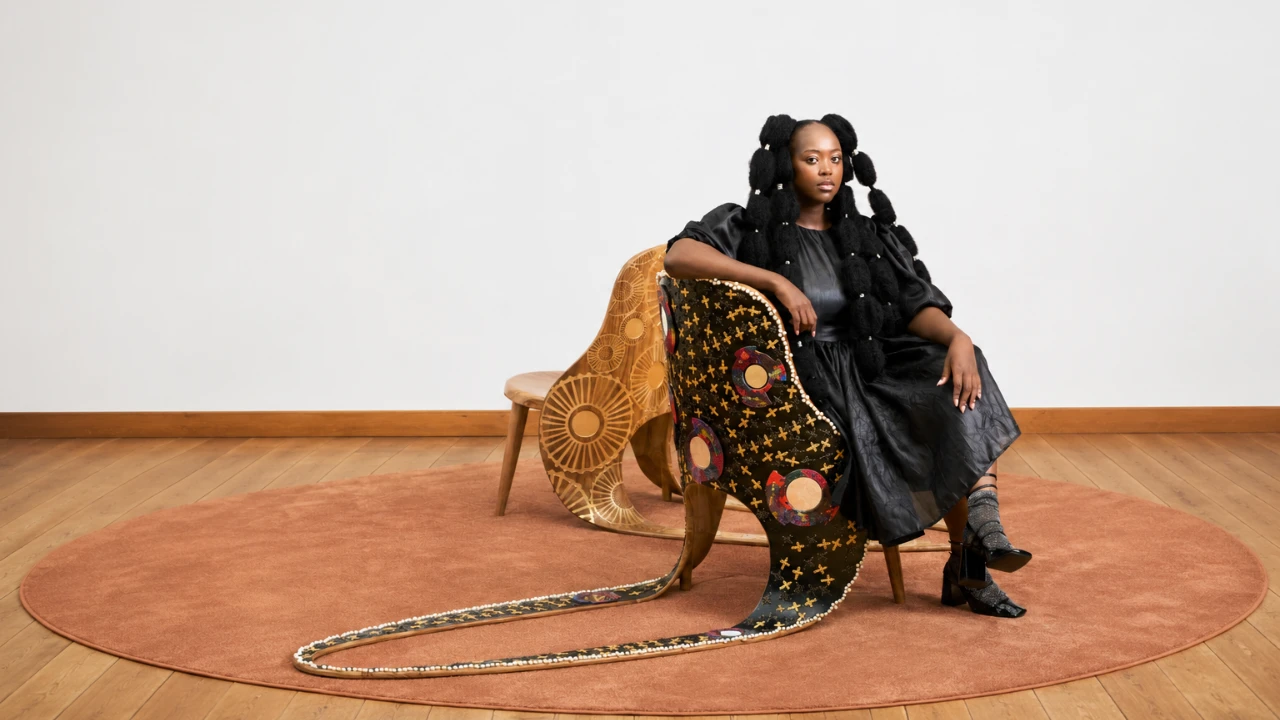
Mash.T is aptly named, bringing to mind “mishmash” and conveying the process of hybrid concepts and playful experimentation. Combining traditional South African craft techniques and motifs with modern production and aesthetics, the design studio’s output feels locally rooted but with a twist.
“Reworking the familiar” is how owner and founder Thabisa Mjo describes it, creating original designs with “layered interpretations”. Her aesthetic is “uniquely me, cool but not too trendy”. It’s also making waves around the world.
Finding design
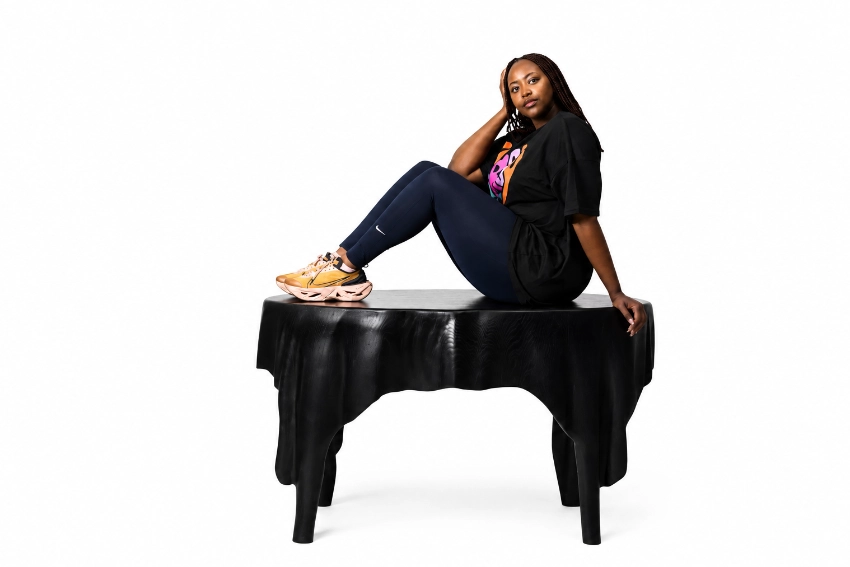
At heart, Thabisa is a storyteller, a film-school graduate who started out creating movie sets, worked in events for a bit, then impulsively entered a competition to design a light for Nando’s restaurants in 2015. The result? First prize. Her Tutu 2.0 pendant light, inspired by the skirts worn by Xitsonga women, was named the Most Beautiful Object in SA at the 2018 Design Indaba, and ended up in the permanent collection of the Musée des Arts Décoratifs in Paris.

She says the “real prize” was discovering she had an untapped gift, and it changed the course of her career. Instead of make-believe film sets, she wanted to create “something spectacular for the real world” and “spaces that people could interact with”. She officially founded Mash.T Design Studio, based in Johannesburg, in 2016, and launches new collections each year at events like 100% Design Africa, the Cape Town Art Fair and Furniture Week.
Since then, her Mjojo Cabinet (inspired by JoJo water tanks) has joined Tutu 2.0 in the permanent collection in Paris, and her Hlabisa Bench was acquired by the Centre Pompidou in Paris. In 2024, Thabisa was included in Dolce & Gabbana’s Next Generation initiative and her work exhibited at Milan Design Week. She was also included in the book Designed for Life, showcasing the 100 most exciting designers from around the world.
Led by curiosity
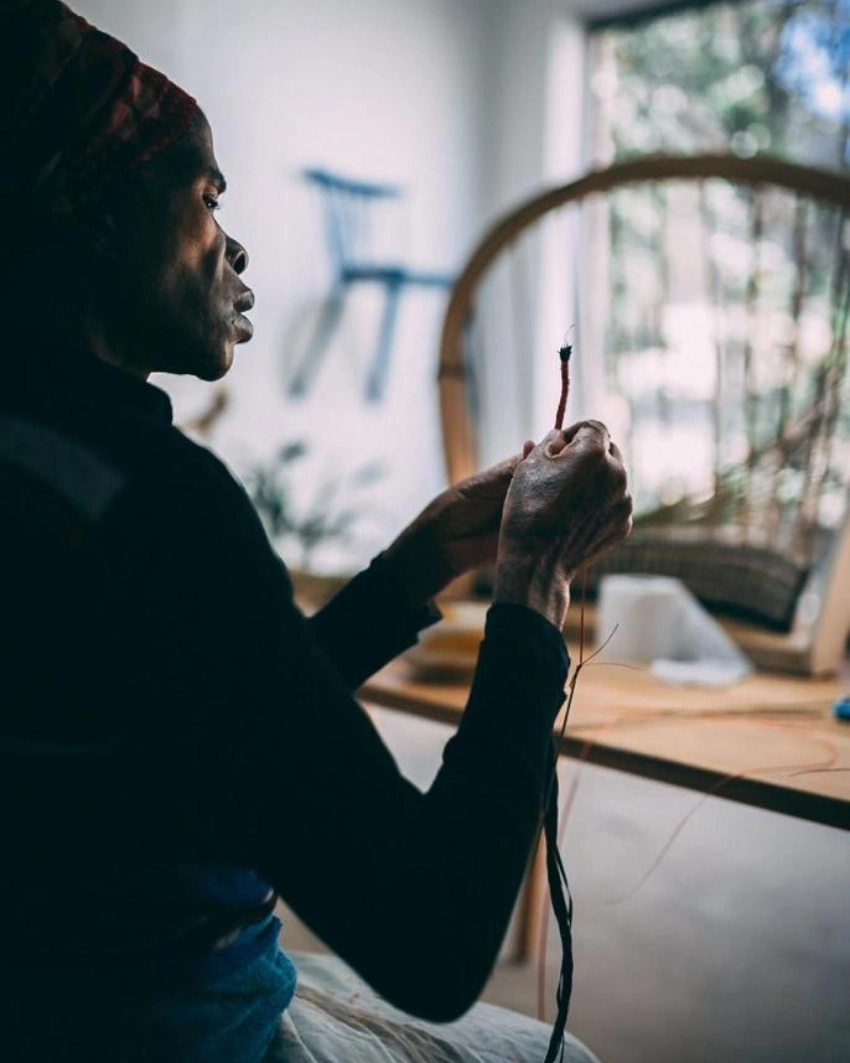
Combining hand-making with modern manufacturing processes, the Mash.T studio is led by curiosity – “what materials can do, how they are made, how they age, the skills they require and the histories they carry,” says Thabisa.
Over the years, she has experimented with all manner of products, but is focusing on sculptural lighting and selected furniture pieces for now. In this process, African arts materials are combined with various metals to create contemporary pieces.
Beadwork, one of Africa’s most iconic crafts, is produced in intricate patterns, symbols and colours that carry cultural meaning. Colourful telephone wire is also woven into pendant lights with traditional patterns. Ilala palm, indigenous to the KZN north coast, is coloured with natural dyes made from seasonal vegetation, roots and specific tree barks, then handwoven into organic-shaped lights and side tables.
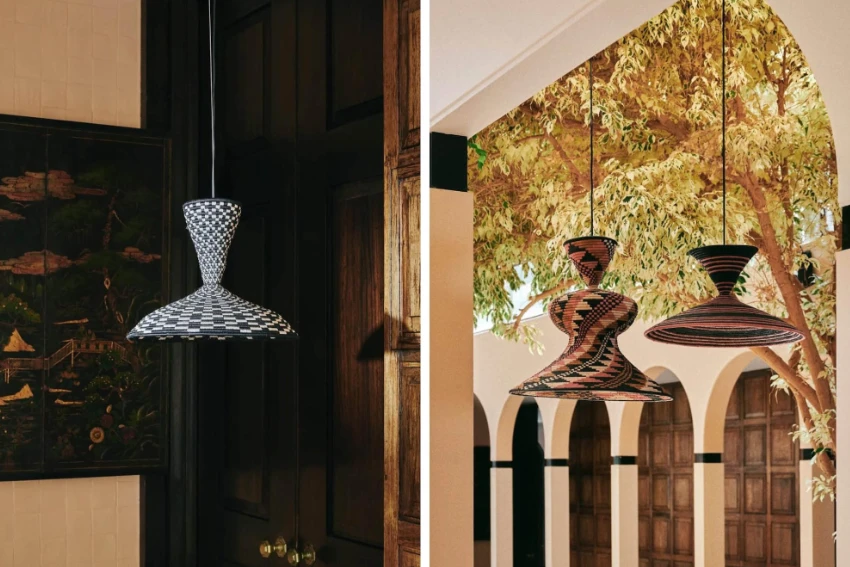
As a storyteller, Thabisa is naturally drawn to history and heritage, and in many ways her work is all about the preservation of traditional craft techniques. “For me, arts and crafts and anything handmade represent luxury. My aim is to merge these traditional production methods with forward-thinking design.”
Collaboration is vital in this mission. So far Mash.T has worked with the Qaqambile Bead Studio, master weaver Beauty Ngxongo, telephone-wire artist Bab Alfred Ntuli and furniture makers Houtlander.
Inspired collections
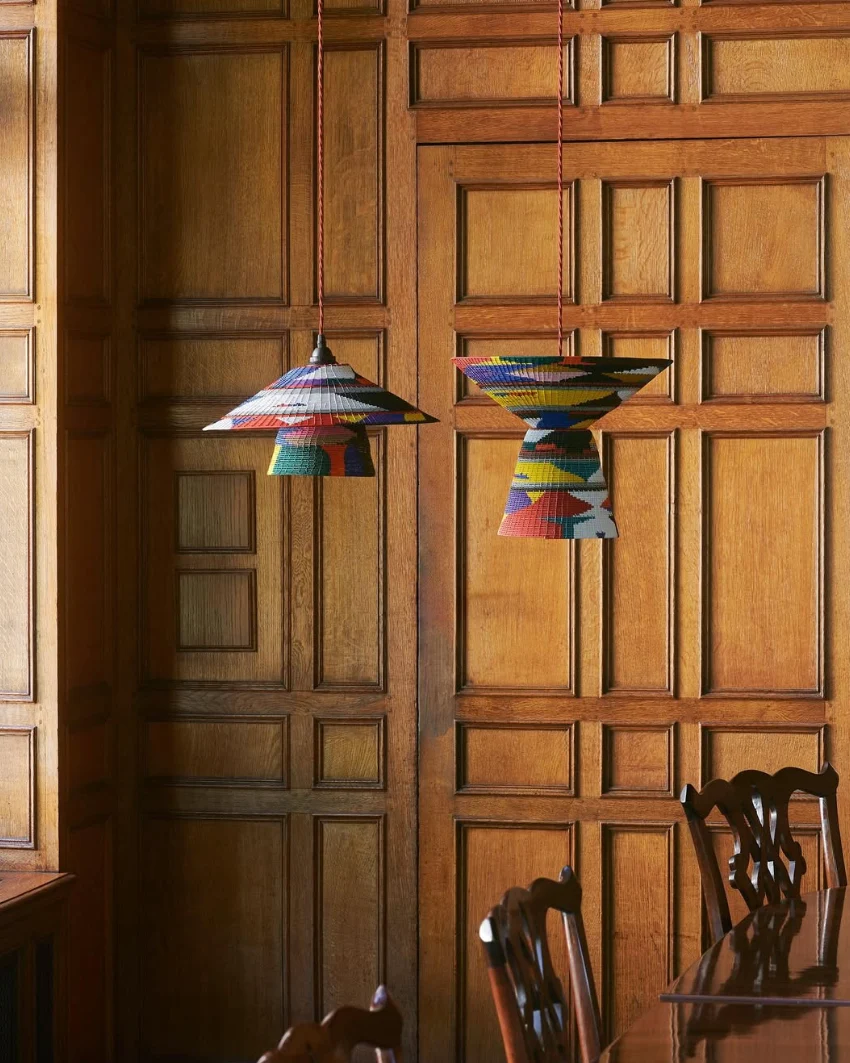
There are pendant lights based on the design of rural Eastern Cape dwellings, weaver bird’s nests and satellites in orbit. A cluster of pendant lights mirrors the Joburg skyline (Hillbrow Tower, the Sentech and Ponte buildings). Her Brazzo lamps were inspired by Lego blocks, which can be manipulated into interesting new shapes, and the idea of using something old (brass) to make something new and funky.
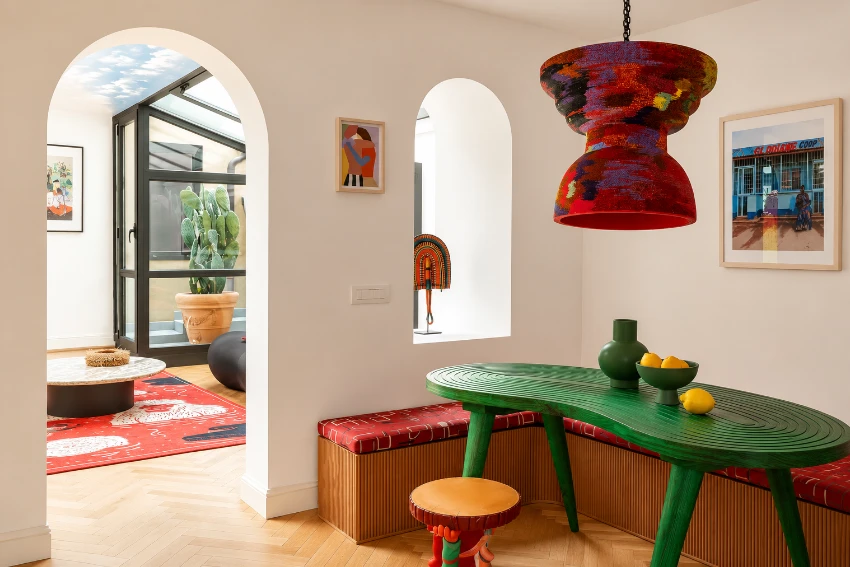
The Flute table is a terrazzo design reminiscent of a flared skirt, with a Midcentury Modern vibe. The oak Daub dining table, with its textured surface, came from watching her Zulu grandmother plastering the floors and walls of her hut with cow dung. The curvaceous Noodle sofa, inspired by 70s glam and experiments with foam “pool noodles”, is thoughtfully split into two portions (one lounging side, one upright).

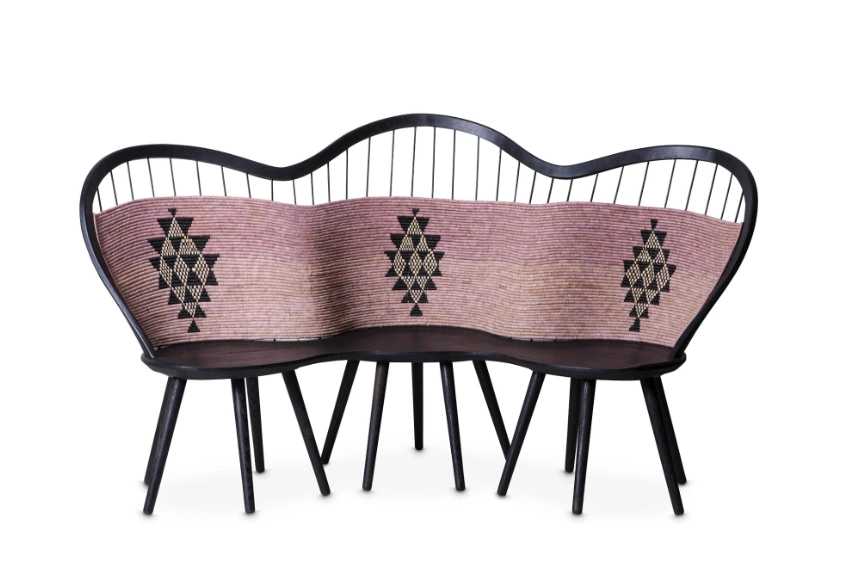
The Hlabisa Bench, a collaboration with Houtlander, is named after the rural corner of KZN that is home to some of SA’s best weavers, including Beauty Ngxongo and Ma Ntuli, who created the backrest (it took 1 300 hours). The undulating shape recalls the hills of KZN, while the seat and legs echo the traditional potjie pot her grandmother used.
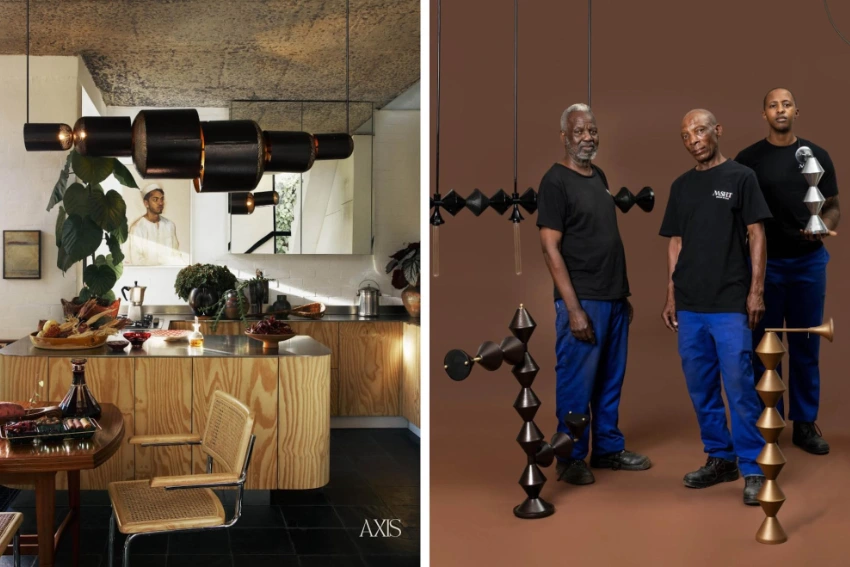
Mash.T’s latest collection, Axis, is a range of geometrical lights in copper bond, mild steel and mesh, including the Concertina pendant of stacked discs that “move visually” across the ceiling, the quirky Tin Soldier, inspired by offcuts, and the Trapezium floor lamp. The story behind them is the journey of learning, from apprentice to master artisan, and the transfer of knowledge from generation to generation.
There is no brick-and-mortar showroom but Mash.T launched its online store in 2021, so log on and see what covetable decor piece catches your eye. If you’re in Johannesburg, you can make an appointment to visit the studio.
Contact 069 318 2732, [email protected]
Where to find it Online
Shop Now
Discover all of the Cape’s hidden gems – subscribe to our weekly newsletter.


Share your opinion